
What Makes It Different from Every Other Place
When you think of authentic Punjabi cuisine, one name stands out — Kesar Da Dhaba. For over 110 years, this iconic dhaba in Amritsar has been serving something that keeps people coming back: their legendary dal fry. But here’s what makes it different from every other place you’ll visit.
This isn’t just any dal fry. This is the original recipe passed down through generations, the one that people have been lining up for since 1916. If you’ve been searching for the real deal, the authentic dal fry that tastes like home, you need to know the story behind what makes Kesar’s version special.
“When you taste Kesar Da Dhaba’s dal fry, you’re not just eating a dish. You’re tasting 110 years of practice, tradition, and respect for the craft of cooking.”
The Origin Story: From Sheikhupura to Amritsar
Everything started in 1916 when Lala Kesar Mal and his wife Parvati opened a small eatery in Sheikhupura (now in Pakistan). They had one simple mission — serve honest, delicious food that people would remember. Their specialty? Dal fry and roti.
Word spread fast. Soon, the restaurant became famous among locals, travelers, and pilgrims. Even legendary freedom fighter Lala Lajpat Rai would stop by. Later, Pandit Jawaharlal Nehru and Indira Gandhi reportedly ordered food parcels from this humble dhaba. That tells you something about the quality and authenticity of their dal fry.
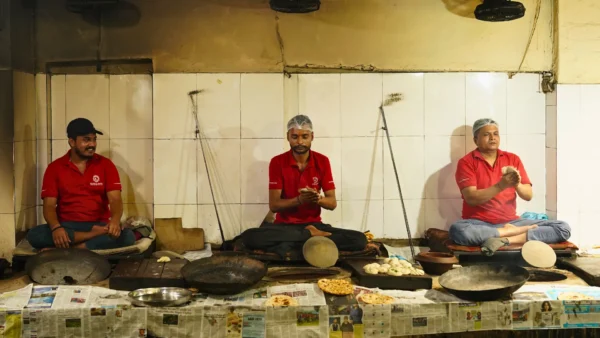
When India was partitioned in 1947, Lala Kesar Mal made the difficult decision to shift his dhaba to Amritsar. Today, over 110 years later, it still sits in the narrow lanes near the Golden Temple — and it looks almost exactly as it did back then. The wooden benches, the old-school charm, the kitchen filled with traditional brass utensils… everything tells a story.
The dhaba has refused to modernize or expand into chains. They’ve stayed true to their roots. That’s why their dal fry still tastes the way it did a century ago. Read more about Kesar Da Dhaba’s century-old history.
What Makes Their Dal Fry Different?
The 12-Hour Slow Cooking Method
Here’s the secret that most places won’t tell you: Kesar Da Dhaba’s dal fry isn’t rushed. It’s prepared in large steel caldrons and simmered for over 12 hours on a slow flame. Not 30 minutes. Not 2 hours. Twelve full hours.
Why does this matter? Because time creates flavor. When you cook dal fry slowly, the lentils break down completely, releasing their natural sweetness and richness. The spices have time to infuse every single grain. The ghee coats everything perfectly. This is why their dal fry tastes so creamy and deeply flavorful — it’s not cream or butter doing the work. It’s time, heat, and tradition.
Pure Desi Ghee — A Belief System, Not Just an Ingredient
At Kesar Da Dhaba, ghee isn’t treated as an ingredient you add. It’s a belief system. Their dal fry is made with generous amounts of pure desi ghee, and you can literally taste it in every spoonful.
This isn’t about showiness. It’s about understanding that good fat carries flavor. Ghee makes the dal fry rich, aromatic, and deeply satisfying. One meal here will keep you full, not because it’s heavy, but because the flavors are so intense and well-developed.
Traditional Cooking Vessels
Kesar Da Dhaba still uses old-school brass and steel utensils. These aren’t just for show. Traditional vessels distribute heat differently than modern cookware. They allow the dal fry to cook more evenly and develop better flavor. Modern non-stick pans? They don’t have the same thermal properties.
This is one of those things you don’t notice until you compare side-by-side. The dal fry cooked in traditional vessels just tastes better.
Why This Dal Fry Tastes Like Home
There’s something about Kesar Da Dhaba’s dal fry that hits different. It’s not fancy. There’s no presentation magic, no microgreens on top, no Instagram filter needed. Yet when you take the first spoonful, you understand why people have been coming back for 110 years. According to BBC Food, authentic regional cooking like this is what defines true culinary heritage.
It tastes like home. But not just any home — it tastes like Punjab’s home. Like your grandmother’s kitchen. Like a time when cooking wasn’t about being trendy but about making something that would stay with you forever.
The first thing you notice is the aroma. Pure desi ghee mixed with slow-cooked lentils. It’s rich, warm, and inviting. The color is deep orange-brown, not the bright red of dal makhani. It’s understated. Honest.
Then you taste it. The dal fry melts on your tongue. It’s creamy but not heavy. Spiced but not overwhelming. There’s a subtle sweetness from the lentils that have been cooked for hours. The ghee coats your mouth with a richness that feels nourishing, not greasy. Every spoonful tastes the same — perfectly balanced, perfectly cooked.
This is what 110 years of practice tastes like.
People who grew up eating this dal fry say they can taste the difference instantly if it’s made anywhere else. It becomes a memory, a standard, a connection to home. When they’re far away, they come back specifically for it. When they bring visitors, they order it first because they know it will impress.
The dal fry here isn’t trying to be something it’s not. It’s not competing with creamy dals or fancy restaurant versions. It’s just being what dal fry was always meant to be — simple, authentic, deeply flavorful.
Why Kesar’s Dal Fry Stands Alone
You’ll find dal fry at dhabas all over Punjab. But Kesar Da Dhaba’s version is different for three reasons:
1. They’re Still Using the Original Recipe
Most dhabas have adapted their recipes over time. They’ve cut corners, reduced cooking time, or changed ingredients. Kesar Da Dhaba hasn’t. They’re cooking dal fry the exact same way they did in 1916. That consistency over 110 years is rare.
2. No Shortcuts
They don’t use cream, butter, or any modern shortcuts to make the dal fry creamy. It’s all natural cooking and pure ghee. This is why it tastes like “dal” and not like a different dish altogether.
3. Quality of Ingredients
A restaurant that’s been around for 110 years doesn’t survive by using cheap ingredients. They source quality lentils, pure ghee, and fresh spices. This shows in the taste.
The 110-Year Legacy
Kesar Da Dhaba has survived multiple challenges and remained a cultural icon. Slurrp, India’s premier food and lifestyle platform, regularly features heritage restaurants like Kesar that embody the soul of traditional cuisine. This dhaba is one of those rare places where history, food, and culture converge.
What Kesar Da Dhaba Has Endured
- Partition of India (1947) — relocated, rebuilt, thrived
- Economic changes and modern restaurant trends
- Competition from chains and modern eating establishments
- Over a century of changing food preferences
- The rise of fast food and convenience culture
The fourth generation of the family still runs it. They’ve been trusted with recipes that have been passed down, refined, and perfected over more than a century. When you eat their dal fry, you’re tasting 110 years of practice, tradition, and respect for food.
How to Experience the Real OG Dal Fry
If you’re ever in Amritsar, Kesar Da Dhaba is located in Chowk Passian, just a 10-minute walk from the Golden Temple. Be prepared for crowds — this place is popular with locals and tourists alike. The seating is simple and old-school, which is part of the charm.
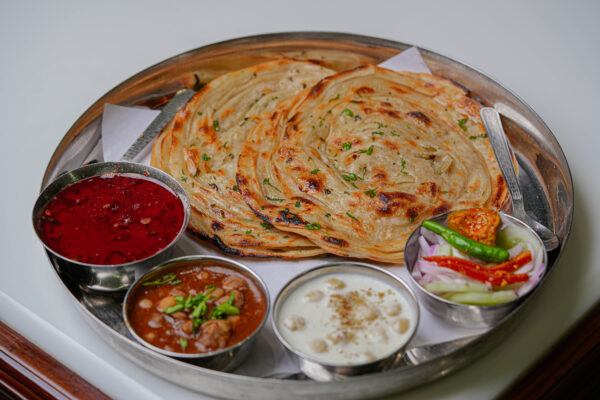
Order the dal fry with a laccha paratha (layered paratha) or aloo paratha. Add a glass of their homemade lassi. This is how Punjabis have been eating it for over a century, and it’s still the best way to experience it.
The Real OG Dal Fry Awaits
The real OG dal fry isn’t the one with the fanciest plating or the most viral hashtag. It’s the one that’s been made the same way for 110 years. It’s the one that fed freedom fighters and prime ministers. It’s the one that tastes like home to thousands of people.
That’s Kesar Da Dhaba’s dal fry.
If you want to know what authentic Punjabi cooking tastes like, start here. If you want to understand why a simple dish of lentils can be elevated to something truly special, come for the dal fry. If you want to taste history in Amritsar, this is where it’s at.
Frequently Asked Questions About Our Dal Fry
Why is Kesar Da Dhaba’s dal fry so special?
It’s cooked for 12+ hours in traditional brass utensils over slow flame, using pure desi ghee and no shortcuts. This 110-year-old method creates a depth of flavor that can’t be replicated quickly. The recipe is unchanged since 1916.
What is the difference between dal fry and dal makhani?
Dal fry at Kesar is simpler and more authentic — just lentils, ghee, and spices with no cream. It’s cooked slowly to develop natural creaminess. Dal makhani often uses cream and tomatoes for richness. Kesar’s dal fry tastes like traditional Punjabi cooking.
How long does it take to cook Kesar’s dal fry?
The dal fry is slow-cooked for over 12 hours — sometimes overnight — in large steel caldrons on a low flame. This extended cooking time is what gives it the creamy texture and deep flavor.
Is the dal fry vegetarian?
Yes, absolutely. Kesar Da Dhaba is a 100% pure vegetarian dhaba. The dal fry contains only lentils, ghee, spices, onions, tomatoes, and ginger-garlic. No meat, fish, eggs, or animal products of any kind.
What should I order with the dal fry?
The classic combination is dal fry with laccha paratha (layered, buttered paratha) or aloo paratha. Add a glass of their thick, cold lassi to cut through the richness. End with phirni (rice pudding) for dessert.
How much does a meal at Kesar cost?
The pricing is fair and generous. A single thali is filling enough for two people. One meal is significantly cheaper than most restaurants, while the quality is incomparable. This has been their philosophy since 1916.
When should I visit to avoid long waits?
Weekday afternoons and early evenings have shorter waits. Weekends and post-prayer hours near the Golden Temple can mean 45–60 minute waits. Arriving before peak meal hours (12–1 PM, 7–9 PM) is your best strategy.
Can I get the dal fry recipe?
The exact recipe is a family secret passed down since 1916. However, the core is simple: quality lentils, 12+ hours of slow cooking in traditional vessels, pure desi ghee, and patience. Modern shortcuts simply don’t achieve the same result.
How old is Kesar Da Dhaba?
Founded in 1916 by Lala Kesar Mal and his wife Parvati, Kesar Da Dhaba is over 110 years old. It originally operated in Sheikhupura (now Pakistan) and relocated to Amritsar after the 1947 Partition. The same family runs it today.